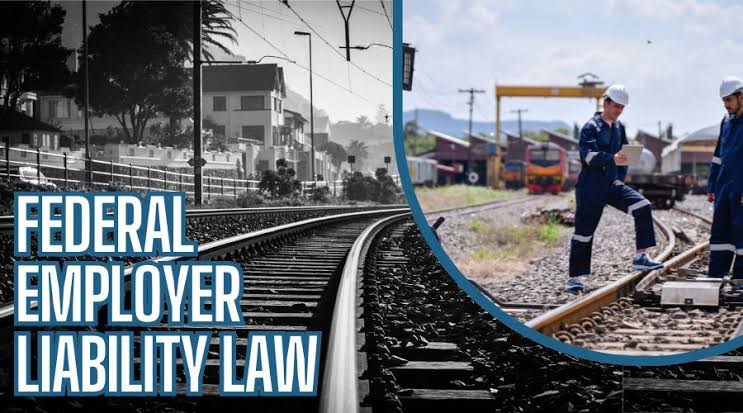
The American railroad system is a massive industrial network. Day and night, thousands of conductors, engineers, trackmen, signal maintainers, and carmen keep freight and passenger trains moving across thousands of miles of track. Yet, working on the railroad remains an incredibly hazardous job. Heavy rolling stock, high-voltage lines, toxic exposures, and demanding physical labor create a high risk of catastrophic workplace accidents.
When a typical commercial worker is injured on the job, they file a standard state-level workers’ compensation claim. However, railroad employees do not have access to traditional workers’ comp. Instead, their rights are governed by a specific federal law passed by Congress in 1908: the Federal Employers’ Liability Act (FELA).
Navigating a FELA railroad injury lawsuit requires an understanding of how federal maritime and transport laws differ from ordinary injury claims. Securing the help of an experienced railroad injury lawyer is often essential for injured workers looking to recover full financial damages.
FELA vs. Traditional Workers’ Compensation
The operational structure of FELA is fundamentally different from a standard workers’ compensation claim. For injured rail workers, understanding these differences is vital to protecting their legal rights.
               [ On-the-Job Railroad Injury ]
                              │
                              ▼
               [ Federal Protection Applies ]
                              │
               ┌──────────────┴──────────────┐
               ▼                             ▼
       FELA LAW (Railroad)          WORKERS' COMP (Land-Based)
       • Must prove employer fault   • No-fault system
       • Full wage recovery          • Partial wage caps
       • Pain & suffering included   • No pain & suffering damages
1. The Fault Requirement (Negligence)
Traditional workers’ compensation is a “no-fault” system. An injured warehouse or office worker does not need to prove their employer did anything wrong to receive medical coverage. Under FELA, however, an injured rail worker must actively prove that the railroad company was negligent. This means you must show that the railroad failed to provide a reasonably safe workplace, proper tools, or adequate training, and that this failure caused your injury.
2. The Legal Burden of Proof (“Featherweight” Burden)
While proving negligence sounds difficult, the legal burden of proof under FELA is actually much lower than in a standard personal injury lawsuit. Often referred to as a “featherweight” burden of proof, a railroad worker only has to demonstrate that the employer’s negligence played any part at all—even the slightest fraction—in causing the resulting injury.
3. Comprehensive Financial Recovery
Because FELA requires proving fault, the law does not cap your financial recovery the way state workers’ comp systems do. Workers’ comp usually covers only direct medical bills and a capped portion of lost wages. Conversely, a successful FELA railroad settlement allows injured workers to pursue compensation for their full lost wages, future lost earning capacity, ongoing medical treatment, and non-economic damages like physical pain and suffering.
Common Causes of Serious Railroad Injuries
Railroad yards, repair shops, and main lines are high-risk environments. Catastrophic mechanical failures and structural hazards routinely cause serious, life-altering injuries.
1. Slip, Trip, and Fall Accidents
Railroad tracks are surrounded by ballast—the jagged, uneven crushed stone used to stabilize the ties. Walking along these tracks in poor lighting, or across walkways covered in spilled oil, grease, or accumulated snow, often leads to severe ankle destructions, knee torn ligaments, and spinal trauma.
2. Defective Machinery and Equipment Failures
Railroaders interact daily with heavy mechanical systems, including manual switches, hydraulic handbrakes, slack adjusters, and coupling mechanisms. When a rail yard neglects routine maintenance, a frozen switch or a malfunctioning brake lever can suddenly snap, causing severe crush injuries or traumatic limb amputations.
3. Whole-Body Vibration and Repetitive Trauma
Locomotive engineers and conductors spend thousands of hours inside older locomotive cabs. Constant exposure to low-frequency vibrations and jarring impacts from worn track profiles can cause severe, chronic spine deterioration, herniated discs, and progressive nerve damage over a long career.
4. Occupational Toxic Exposures
Not all railroad injuries happen in a single, sudden crash. Thousands of shop workers and track maintenance crews develop chronic illnesses over decades of exposure to hazardous materials. These include inhaling toxic diesel exhaust fumes, handling cancer-causing solvents, or working around unmitigated asbestos and silica dust, which can cause lung disease or mesothelioma.
Determining the Value of a FELA Case
Because every rail worker’s career, pay rate, and injury history are unique, there is no automatic calculator for a FELA settlement. Instead, seasoned railroad accident attorneys break down potential financial recovery into several clear categories.
| Compensation Category | What It Includes | Why It Matters for Railroaders |
| Lost Wages & Future Earnings | Straight time, scheduled overtime, and lost pension credits. | Railroad employees generally earn high wages. A permanent injury that prevents a worker from returning to duty can easily result in over $1 million in lifetime economic losses. |
| Comprehensive Medical Expenses | Surgeries, physical therapy, prescription medication, and future specialized home care. | Rail workers deserve access to independent medical specialists, not just doctors chosen by the railroad’s risk management team. |
| Pain and Suffering | Physical agony, long-term physical discomfort, and emotional trauma. | FELA allows full recovery for the toll an injury takes on your daily quality of life—a benefit completely absent from workers’ comp. |
Comparative Negligence: How Fault Affects Compensation
A key element of FELA law is the rule of pure comparative negligence. During a lawsuit, the railroad company will almost always argue that the worker was partially at fault for their own injury by failing to follow a specific safety rule.
Under pure comparative negligence, if a jury finds that you were partially responsible for the accident, your final financial award is simply reduced by your percentage of fault. For example, if a jury awards $1,000,000 in total damages but finds the worker was 20% at fault for the incident, the final recovery amount will be $800,000. Even if a worker shares a portion of the blame, they are still legally entitled to pursue compensation for the railroad’s share of fault.
Crucial Action Steps After a Railroad Accident
The hours and days following an on-the-job injury are critical. Railroad companies employ dedicated claims agents and internal legal teams who begin working immediately to limit the company’s financial liability. Injured workers should take deliberate steps to protect their health and secure their right to a fair recovery.
1. Seek Immediate Independent Medical Evaluation
Your physical health is the highest priority. If you are hurt, insist on being treated at an independent emergency room or by a doctor of your own choosing. Do not let a company official pressure you into seeing a corporate-approved physician who may downplay the severity of your condition.
2. Complete the Personal Injury Report Safely
Railroads require injured workers to fill out an official injury report before their shift ends. When writing your report, be clear, accurate, and concise. State exactly what unsafe condition or defective tool caused the injury. If you are heavily medicated or in severe pain, you have the right to wait until your condition stabilizes before completing this paperwork.
3. Identify and Document Scene Witness Statements
Gather the names, phone numbers, and job titles of your fellow crew members or any other workers who saw the accident or observed the hazardous conditions leading up to it. Witness testimony is often the turning point in proving corporate negligence under FELA.
4. Consult a Qualified FELA Railroad Injury Law Firm
FELA is a highly specialized area of federal law that regular personal injury lawyers rarely handle. Speaking with a dedicated FELA attorney ensures you have an advocate who understands rail operations, can subpoena dispatch records and maintenance logs, and can negotiate with the railroad’s claims department from a position of strength.
Conclusion: Securing Accountability and Justice
Railroad workers provide an essential service that keeps the American economy moving. In return, railroad companies have a strict, non-delegable legal obligation to provide their crews with safe working conditions, well-maintained equipment, and proper safety gear. When a company cuts corners to protect its bottom line, FELA provides a vital legal tool for injured workers to secure the financial support they need for their long-term recovery. Navigating these claims with the help of a dedicated legal advocate ensures that injured railroaders can protect their families and hold negligent corporations fully accountable.