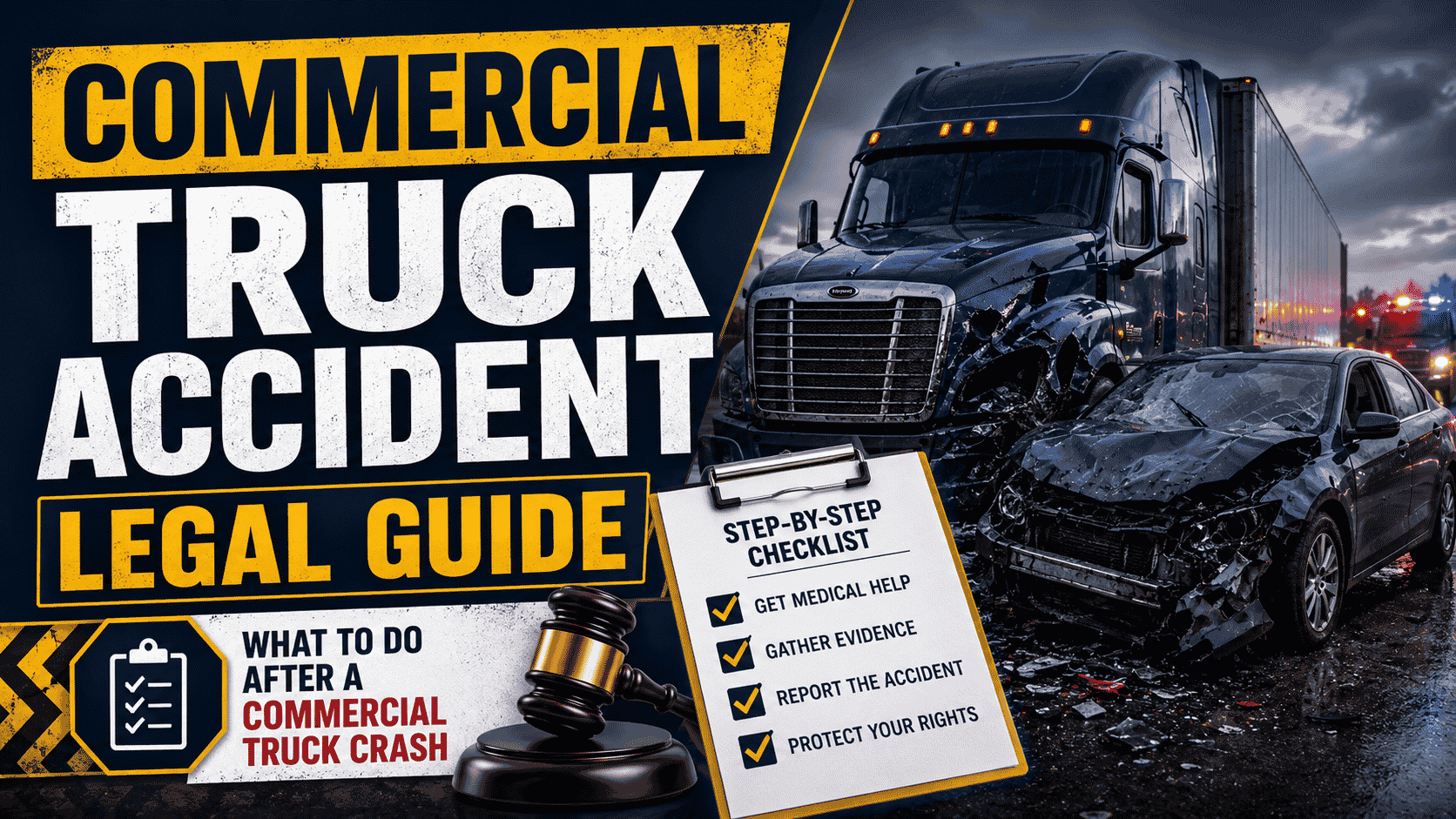
The rapid growth of e-commerce and the necessity of supply chain logistics have placed more commercial vehicles on American roadways than ever before. While delivery networks keep the economy moving, the sheer volume of freight vehicles has led to a significant public safety crisis: a rise in commercial vehicle accidents across the United States.
Because of the vast weight discrepancy between a fully loaded freight hauler and a standard passenger vehicle, the aftermath of a collision is rarely minor. Victims often face life-altering injuries, astronomical medical expenses, and an uphill battle against massive insurance corporations. Navigating the aftermath requires a deep understanding of corporate liability, federal regulations, and how a dedicated truck injury lawyer can protect your rights.
The Rising Trend of Commercial Truck Accidents
According to the National Safety Council (NSC), well over 100,000 large trucks are involved in injury-causing crashes annually across the United States. Over 5,000 large truck collisions result in fatalities each year, representing a massive 30% increase in fatal truck accidents over the last decade.
The statistics reveal a troubling reality for average drivers:
-
Vulnerability of Passenger Cars: Roughly 70% to 72% of all injuries and fatalities in large-truck crashes occur to the occupants of other vehicles, not the truck drivers themselves.
-
Stopping Distance Discrepancies: A loaded commercial delivery truck can take 20% to 40% more physical distance to come to a complete stop compared to a standard car. This distance increases exponentially on wet or icy roads.
-
Massive Force Discrepancy: Commercial rigs can weigh up to 80,000 pounds under federal law, whereas the average passenger car weighs roughly 4,000 pounds. This creates a severe force imbalance upon impact.
For victims facing the physical and financial consequences of a crash, consulting an experienced truck accident attorney is often the only viable pathway to securing fair compensation.
Common Causes of Delivery Truck Accidents
Unlike typical passenger vehicle collisions, commercial delivery vehicle accidents are heavily influenced by the rigorous demands of corporate delivery schedules and supply chains. While some crashes are purely accidental, the vast majority involve some form of negligence.
+-------------------------------------------------------------------+
|              Primary Catalysts for Trucking Accidents              |
+-------------------------------------------------------------------+
|  [Driver Fatigue]   --> Violating Hours-of-Service laws           |
|  [Improper Loading] --> Uneven cargo shifts causing rollovers     |
|  [Poor Maintenance] --> Worn out brake systems and bald tires    |
|  [Distracted Tech]  --> Navigating complex route-tracking software |
+-------------------------------------------------------------------+
1. Severe Driver Fatigue
Despite strict Federal Motor Carrier Safety Administration (FMCSA) hours-of-service regulations, many transport companies pressure their employees to meet grueling delivery windows. Driver fatigue significantly impairs a commercial operator’s reaction time, judgment, and ability to keep a large vehicle in its designated lane.
2. Distracted Driving and Aggressive Maneuvers
Delivery truck operators are frequently forced to look at GPS routing devices, log delivery statuses on handheld electronics, or rush through heavy traffic to meet algorithmic quotas. This behavior leads directly to rear-end collisions and side-impact blind-spot accidents.
3. Negligent Vehicle Maintenance
Commercial trucks log tens of thousands of miles every month. When fleet operators cut corners on replacing brake pads, repairing steering mechanisms, or maintaining heavy-duty tires, catastrophic mechanical failures occur at high speeds.
4. Improper Cargo Loading
If cargo inside a trailer is improperly secured or exceeds federal weight restrictions, it can shift violently during a sudden turn. This shifts the truck’s center of gravity and leads directly to tractor trailer accident scenarios, such as jackknifing or vehicle rollovers.
Deciphering Liability: Who is At Fault?
One of the primary reasons why commercial delivery vehicle claims are so complex is that liability rarely falls on a single individual. If you are injured by a passenger vehicle, you generally sue the at-fault driver. In a commercial truck accident, multiple corporate entities can be held legally liable simultaneously.
A qualified commercial vehicle accident lawyer will investigate the following parties to determine fault:
-
The Truck Driver: For direct negligence such as speeding, driving under the influence, distracted driving, or violating hours-of-service laws.
-
The Trucking or Delivery Company: Under the legal doctrine of respondeat superior, employers are liable for the negligent actions of their employees. Additionally, companies can be sued directly for negligent hiring practices, inadequate training, or encouraging drivers to bypass federal safety rules.
-
The Cargo Loading Entity: If a third-party logistics company loaded the delivery truck incorrectly, causing a hazardous balance issue that led to the crash, they may share third-party liability.
-
The Vehicle Manufacturer or Mechanic: If a critical component—such as an air brake assembly or a tire—fails due to a manufacturing defect or improper repair work, product liability laws may apply.
Steps to Take Immediately After a Delivery Truck Crash
The actions you take immediately following a collision with a commercial vehicle will form the foundation of any subsequent legal claim. Because trucking corporations deploy specialized accident response teams to the scene almost immediately, you must act deliberately to preserve crucial evidence.
How a Truck Accident Law Firm Builds a Case
Winning a high-value commercial vehicle claim requires specialized investigative techniques that are completely different from a standard car insurance claim. A dedicated trucking accident law firm will execute a comprehensive investigation to secure proprietary corporate evidence before it can be legally erased or altered.
Retaining the Electronic Logging Device (ELD) Data
Modern commercial vehicles are equipped with Electronic Logging Devices (ELDs). This hardware automatically records drive times, vehicle speed, engine hours, and exact brake usage. This data can prove whether a driver was speeding or illegally operating beyond their permitted hours.
Securing Black Box Data (ECM)
Like commercial aircraft, delivery trucks contain an Electronic Control Module (ECM) or “black box.” This hardware records specific variables in the seconds leading up to a crash, including exact speed, throttle position, and whether the driver attempted to apply the brakes before impact.
Reviewing Internal Corporate Records
Your legal counsel will issue a spoliation letter—a legal warning that forces the delivery company to preserve evidence—to obtain internal documentation. This includes the driver’s qualification files, mandatory pre-employment drug screening results, background checks, and the vehicle’s comprehensive maintenance logs.
Compensation Available for Serious Truck Injury Claims
The primary goal of a personal injury lawsuit or insurance settlement is to restore the financial balance disrupted by the accident. Because commercial vehicle accidents often lead to severe or catastrophic injury categories, the total compensation values can reach six or seven figures.
| Category of Damage | Description of Recoverable Losses | Examples |
| Economic Damages | Verifiable financial losses with exact monetary calculations. | Emergency room bills, surgeries, lost wages, future diminished earning capacity, and property replacement. |
| Non-Economic Damages | Intangible subjective losses impacting your quality of life. | Physical pain and suffering, emotional distress, loss of consortium, and permanent scarring or physical disability. |
| Punitive Damages | Additional monetary fines meant to punish the defendant. | Awarded strictly when a trucking corporation demonstrates gross negligence, such as letting an unlicensed or intoxicated driver operate a rig. |
The Cost of Accidents: According to the FMCSA, while an average commercial vehicle accident causing an injury costs around $148,000, a fatal truck accident can see total social and financial costs skyrocket past $7.2 million.
Why You Need a Dedicated Truck Injury Attorney
Attempting to resolve a delivery truck claim on your own places you at an extreme disadvantage. Large logistics companies employ sophisticated corporate defense teams and insurance adjusters whose sole job is to minimize payouts or deny liability entirely.
An experienced big rig accident lawyer levels the playing field. Personal injury lawyers operate on a contingency fee basis—meaning you pay absolutely zero upfront out-of-pocket costs, and the law firm only collects a legal fee if they successfully win an insurance settlement or a jury verdict on your behalf.
If you or a loved one has suffered severe injuries in a commercial vehicle collision, do not settle for less than your case is worth. Reach out to a certified commercial truck accident lawyer today to schedule a comprehensive, free case review and protect your family’s financial future.